6 Key Takeaways from This Article
The client had a live platform but no legal wrapper
Client B had been operating a sports betting and casino platform for roughly 18 months, yet had no registered company, no documented compliance framework, and no banking structure that could pass processor due diligence.
Costa Rica was chosen for fit, not prestige
The jurisdiction was selected because it solved the real constraints: a 60-day deadline, a USD 30,000-40,000 project budget, and a need for a recognised offshore gaming structure that processors already understand.
The company and the documentation had to be built together
A Costa Rican S.A. alone was not enough. The operating package also needed AML/CFT, KYC, responsible gambling, data privacy, and player-facing documents before processors would restore support.
Parallel execution made the timeline possible
Incorporation, gaming declaration, and compliance drafting were run simultaneously rather than sequentially, which is what kept the project inside the payment-processor deadline.
The end result was operational stability, not just registration
The final deliverable included restored payment-processing relationships, a maintenance schedule, banking introductions, and ongoing compliance routines that the client's internal team could actually run.
Processor acceptance depended on the documentation layer
The Costa Rica S.A. only became commercially usable once the AML, KYC, responsible gambling, privacy, and player-facing documents were assembled into one due diligence package that processors could review and approve.
From Informal Gaming Platform to a Costa Rica Operating Structure
In mid-2024, a referred client whom we call Client B contacted Regulated United Europe with a problem that was already commercial, legal, and time-sensitive. The client had been operating a sports-betting and casino platform informally for around 18 months, serving players in Latin America and Eastern Europe, and the platform was generating real revenue.
What was missing was everything beneath that revenue stream: no registered company, no formal banking structure, no enforceable terms and conditions tied to a legal entity, and increasing pressure from payment processors that wanted proof of a legitimate, documented business operating from a recognised jurisdiction.
The timeline was hard. Two processors had already flagged the account relationship and issued a 60-day ultimatum. The structure therefore had to be fast, affordable, and acceptable to counterparties reviewing the business in real time.
What the Client Already Had
- A live proprietary platform offering sports betting and casino products
- An existing player base across two regions
- A technical team already in place
- Real transaction volume and a pressing 60-day processor deadline
What the Operation Still Needed
- A registered operating company in a suitable gaming jurisdiction
- A jurisdiction decision aligned with budget, timeline, and player geography
- AML, KYC, responsible gambling, privacy, and player-facing operational documents
- A banking and payment structure that could survive due diligence reviews
- An annual maintenance plan and ongoing compliance cadence
Core Strategy
This case was solved by treating documentation as part of the product. A Costa Rican S.A. is a straightforward corporate vehicle, but the company only becomes functional for payment processors, software partners, and banking providers when the legal, compliance, and operational package around it is complete.
That is why we ran jurisdiction analysis, company setup, the gaming declaration, and the processor-facing compliance file in parallel. Waiting for registration to finish before drafting the operational documents would have missed the deadline.
How the Matter Was Run
Diagnose the business model and deadline pressure
Our first call with Client B lasted roughly ninety minutes and focused on the underlying operation rather than on jurisdictions. We needed to understand player geography, payment flow, revenue volumes, software stack, and which contractual and compliance gaps were already causing processor pressure.
The diagnosis showed a common pattern: a real gaming business sitting on top of no legal infrastructure. That meant the solution had to satisfy payment-processor due diligence quickly, not just produce a corporate certificate.
What we assessed
- Player geography and whether the business model fit jurisdictions that tolerate offshore gaming structures
- The due diligence expectations of the three active payment processors, two of which had already raised concerns
- The client’s budget of roughly USD 30,000-40,000 for legal, incorporation, and first-year maintenance costs
- The sequencing needed to finish before the 60-day deadline expired
Supporting Documents
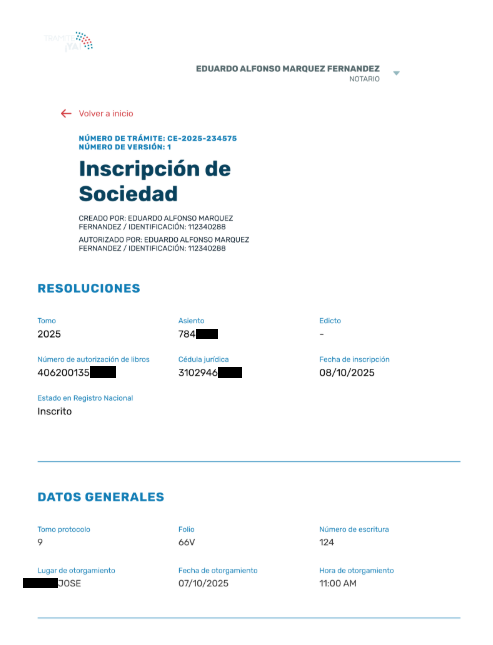
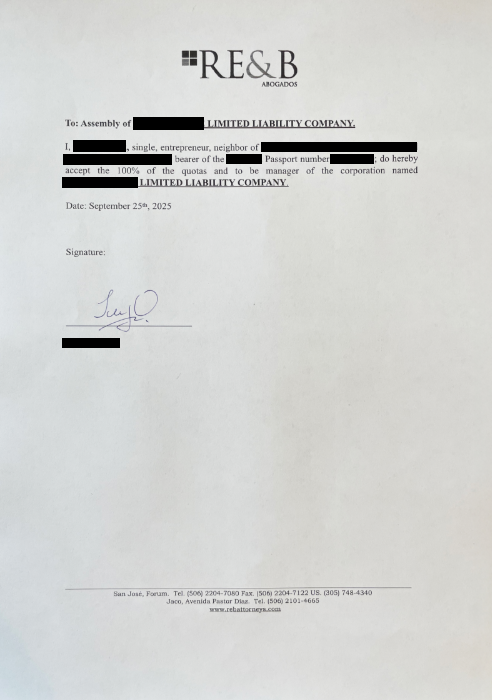
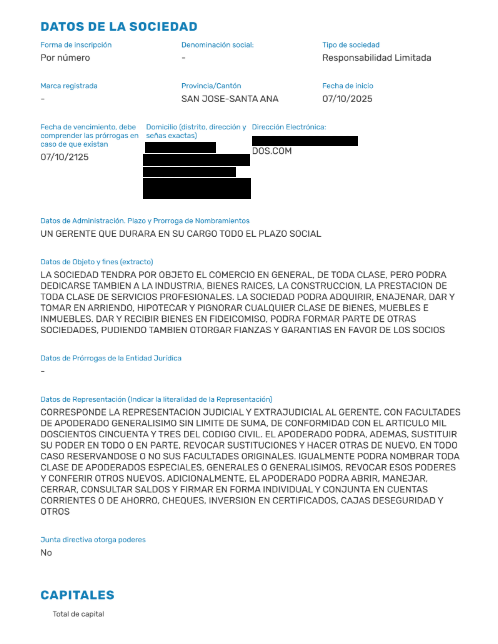
Selected redacted corporate and registry documents used in the Costa Rica structuring and processor-due-diligence workflow.
Jurisdiction Comparison
Costa Rica was selected because it solved the actual commercial problem within the client's time and cost constraints.
| Jurisdiction | Structure Type | Min. Cost | Timeline | Gaming-Specific License | Banking Access |
|---|---|---|---|---|---|
| Costa Rica | Corporation (S.A.) | USD 5,000-15,000 | 4-8 weeks | Yes, via recognised offshore operating model | Moderate |
| Curaсao | NV + Gaming License | USD 25,000-50,000 | 3-6 months | Yes (B2C sublicense) | Good |
| Malta | Ltd + MGA License | USD 100,000+ | 12-18 months | Yes (full MGA) | Excellent |
| Isle of Man | Ltd + GSC License | USD 50,000+ | 6-12 months | Yes | Excellent |
| Panama | Corporation + permit route | USD 20,000+ | 2-4 months | Conditional | Moderate |
What This Case Study Demonstrates
Client B arrived with a working platform, real revenue, and a real deadline, but without a legal foundation that processors or partners could continue to support. Nine weeks later, the business had a registered operating entity, a full compliance document framework, restored payment-processing relationships, and an annual maintenance structure that could be sustained after launch.
Three decisions made the outcome possible:
- Choosing the jurisdiction for fit rather than prestige. Costa Rica did not offer the same regulatory optics as Malta, but it solved the actual problem inside the budget and timeline.
- Treating documentation as the real product. The S.A. itself was simple; the processor-accepted AML, KYC, responsible-gambling, privacy, and player-facing package is what transformed it into an operational gaming business.
- Running the workstreams in parallel. Incorporation, gaming declaration filing, and compliance drafting happened at the same time, which is what made the nine-week turnaround realistic.
The practical lesson is that speed in grey-zone gaming structures is not an administrative accident. It comes from understanding the critical path, knowing which documents processors actually ask for, and building the legal wrapper and the operating file together.
All corporate documents, correspondence, and personal information referenced in this article were anonymised or redacted to protect client confidentiality. Screenshots were published with client consent.
Why Regulated United Europe?
Regulated United Europe OÜ (RUE) is a European legal consulting firm specializing in financial licensing, company formation, and regulatory compliance. Since 2016, we have helped hundreds of businesses obtain crypto, gambling, forex, and EMI/PSP licenses across 35+ jurisdictions.
With offices in four EU countries and a team of experienced lawyers, we provide end-to-end support — from initial consultation and company registration to license acquisition and ongoing compliance management.
500+
Clients Served
35+
Jurisdictions
Since 2016
Years in Business
4
EU Offices
Licensed Legal Practice
Fully registered and regulated EU company with partnerships across major financial centers.
Multilingual Team
Our experts speak English, German, Russian, Chinese, and 12+ other languages for global client support.
Turnkey Solutions
From company registration to license acquisition and compliance — we handle the entire process end-to-end.
Dedicated Support
Personal consultant assigned to each client. Direct communication channels, no call centers.


