The French Financial Markets Authority (Autorité des marchés financiers, AMF) is the main regulatory body responsible for overseeing the cryptoasset sector. Its activities are aimed at providing legal certainty and transparency in the rapidly evolving digital sector. With the increasing use of blockchain technology and the emergence of new forms of digital assets, the AMF has adapted the existing regulatory framework to ensure effective regulation of emerging legal risks and new forms of economic activity. Despite the decentralised nature of cryptocurrencies, they create a set of legal issues that require a specific legal approach. As an independent administrative body, the AMF has developed regulatory mechanisms aimed at creating a transparent and controlled environment for the operation of cryptocurrency projects in France. Cryptocurrencies do not have legal tender status in France. According to Article L112-1 of the Monetary and Financial Code (Code monétaire et financier), only official currencies such as the euro are recognised as legal tender. In practice, however, cryptoassets are often qualified as digital assets within the application of European Union law, including the provisions of Regulation (EU) No 575/2013 governing requirements for credit and investment institutions. From a French civil law perspective, cryptocurrencies are treated as intangible movable assets. Thus, despite their lack of currency status in the strict legal sense, crypto-asset transactions can be classified as movable property transactions and are therefore subject to taxation and legal regulation under general private law.
Regulation of digital asset service providers (DASPs) under French law
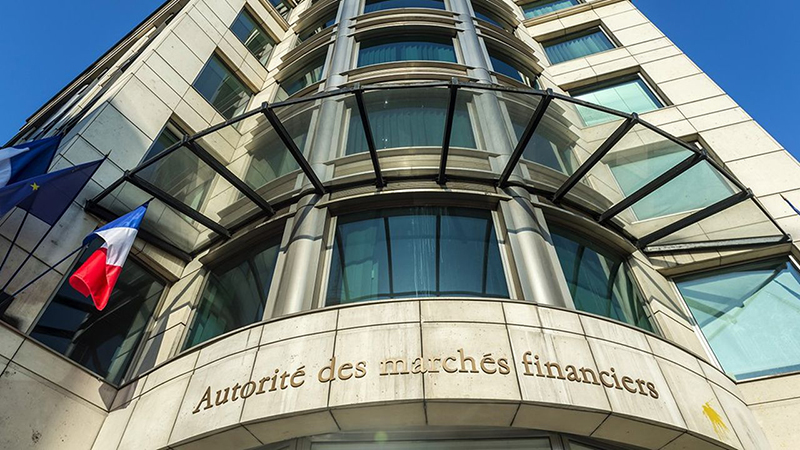
A significant milestone in shaping the legal regime for cryptoasset transactions in France was the adoption of Law No. 2019-486 of 22 May 2019, aimed at fostering business growth and transformation (the so-called Pacte Law). The said statutory act established the framework for the regulation of digital asset service providers (prestataires de services sur actifs numériques, PSAN), by introducing the relevant provisions in the French Monetary and Financial Code. Pursuant to Article L. 54-10-2 CMF, PSANs include natural or legal persons providing certain services in relation to digital assets. Such services include transactions to exchange crypto-assets for fiat currencies or other crypto-assets, managing cryptocurrency portfolios, holding digital assets on behalf of clients, providing access to trading platforms, and providing investment advice related to crypto-assets. Digital service providers are subject to AMF supervision and are required to comply with statutory provisions on anti-money laundering and counter-terrorist financing. Such requirements stem from Article L561-2 of the Monetary and Financial Code and imply compliance with a set of procedures to identify customers and control suspicious transactions.
Depending on the specific nature of their activities, PSANs must either undergo mandatory registration with the AMF – or obtain prior approval from the regulator in order to start operating on the French market.
Registered providers must comply with the following key requirements:
- Implementing measures to prevent money laundering and terrorist financing, including customer identification procedures and internal controls over transactions.
- Ensuring transparency: the provider is required to provide comprehensive and accurate information about the nature of the services provided and the risks involved.
- Protecting investors’ interests: the provider has a duty to warn users of the potential high volatility of cryptoassets and the associated investment risks.
This regulatory approach forms in France one of the most structured and transparent models for the regulation of digital assets within the European Union.
|
«Company & MiCA license application in France» |
64,000 EUR |
- Preparation of necessary documents for registration of a new company in France
- Translation of a certificate of no criminal record into French through a sworn translator
- Payment of state fees related to company registration
- Payment of notary fees related to company registration
- Preparation of compliance documents for MiCA application
- Preparation of a business plan based on the regulatory requirements, including financial projections and risk assessment
- Submission of the necessary documents to the Autorité des Marchés Financiers (AMF – French Financial Markets Authority) and Autorité de Contrôle Prudentiel et de Résolution (ACPR – French Prudential Supervision and Resolution Authority)
- Recruitment of local MLRO/Compliance officer
- Registration with the French Trade and Companies Register (Registre du Commerce et des Sociétés – RCS)
- Appointment of local directors and ensuring compliance with French “fit & proper” requirements
- Preparation of AML/CTF and governance policies in accordance with French Monetary and Financial Code
- Finding and rental of a physical office in France (to meet local substance and operational requirements)
Timeframe: up to 9 months
Initial coin offerings (ICOs) in France
Initial Coin Offering (ICO) is a method of raising finance through the issuance of digital tokens that are sold to investors in exchange for fiat money or other crypto-assets. Although technologically innovative, such capital raising schemes are subject to legal and supervisory risks, in particular due to their decentralised nature, lack of guarantees of return on investment and the participation of ill-informed investors. As part of the reforms implemented under the provisions of the Pacte Law, France has introduced a system of voluntary visibility of ICO projects by the Authority for the Financial Markets (AMF). The visibility is optional, but if it is available, the issuer receives a formal confirmation that the information transmitted to investors complies with the transparency standards established by the financial legislation. AMF in this case performs preliminary control of the documentation submitted as part of the token offering (including the technical and investment memorandum – white paper), verifying the completeness, accuracy and structure of the disclosure. According to Article L552-3 of the Monetary and Financial Code, the issuance of a visa is not a guarantee of the financial stability of the project, its profitability or the integrity of the organisers. It only indicates the compliance of the submitted information materials with the formal requirements of the legislation. One of AMF’s tasks in this area is to minimise the risks of fraud accompanying ICOs. Some projects may be used for unfair purposes, such as market manipulation or pump and dump schemes. With this in mind, the AMF is authorised to prohibit the implementation of certain ICOs if they do not meet transparency requirements or threaten the interests of investors.
Regulation of securities tokens and cryptocurrency derivatives in France
Some tokens issued by blockchain projects may qualify as security tokens. Such assets fall within the definition of financial instruments under the provisions of the Markets in Financial Instruments Directive 2014/65/EC (MiFID II). If the tokens have the characteristics of securities, they are subject to regulation in the same way as traditional financial instruments such as shares, bonds or derivative contracts. Tokens of this type are subject to the MiFID II regulatory framework – including transparency, disclosure, compliance with trading on regulated platforms, and investor protection requirements. Issuers of such tokens are required to provide investors with full information about the project, token characteristics and associated risks. In addition, if tokens are offered on the open market, compliance with prospectus legislation is required, as provided for under European and French law. The AMF pays particular attention to derivatives linked to crypto-assets, such as futures, options, contracts for difference (CFDs) and other derivative forms. These instruments are considered full-fledged financial contracts and are subject to regulation under both the national Monetary and Financial Code and MiFID II. Financial intermediaries offering derivative products are required to obtain an appropriate licence to operate and are subject to regulatory requirements in terms of investor protection. In particular, they must provide potential clients with reliable and comprehensive information on the potential risks associated with investing in crypto-asset derivatives, given the highly speculative and volatile nature of such instruments.
Regulation of cryptoassets under MiCA in France
 The French Financial Markets Authority (AMF), while supervising under national regulations, is also subject to legal harmonisation under pan-European regulation. The Markets in Crypto-Assets (Markets in Crypto-Assets, MiCA) Regulation of the European Parliament and of the Council, adopted in 2022 and entering into force on 1 January 2025, is a key legal instrument aimed at unifying approaches to the regulation of the crypto-industry in all member states of the European Union. MiCA introduces a set of requirements for cryptoasset issuers, related service providers and trading platform operators. The main provisions of the Regulation relate to mandatory licensing of market participants, standardisation of prudential norms, establishment of information disclosure procedures, as well as strengthening of internal governance and compliance control requirements. Service providers operating in the field of crypto-asset transactions are required to obtain appropriate authorisation (CASP licence) to provide services such as custody of digital assets, exchange, transfer, execution of orders on behalf of clients, portfolio management and provision of investment advice. Mandatory pre-clearance procedures for clients are introduced, including the publication of investment documents and disclosure of risks associated with digital assets. MiCA pays special attention to the regulation of stablecoins recognised as potentially significant in terms of financial stability. Enhanced provisioning, transparency and supervisory requirements are set for issuers of such assets, aimed at preventing systemic threats within the European Union financial system. MiCA also emphasises the importance of service providers’ compliance with European anti-money laundering and countering the financing of terrorism (AML/CFT) regulations. Compliance measures in this area are becoming a mandatory part of the operational activities of all licensed CASPs in the EU. The implementation of MiCA provisions in France will be overseen by the AMF as the authorised national authority. This entrusts it with the authority to oversee crypto operators’ compliance with the new regulatory requirements, including issuing licences, monitoring compliance and applying sanctions mechanisms in case of breaches. The new regulatory environment requires cryptocurrency market participants to revise their business models, adapt internal processes and align their activities with European standards. In the long term, MiCA will create a single market for digital assets within the EU, providing legal certainty, protecting investors and increasing confidence in this segment of the economy.
Markets in Crypto Assets Regulation in France
>On 30 December 2024, the entry into force of the Markets in Crypto-Assets (MiCA) Regulation of the European Parliament and of the Council marked the beginning of a single supranational legal regime governing cryptoassets in the European Union. The adoption of this act was an important step in the digitalisation of the EU financial sector and is aimed at eliminating the fragmentation of national regulatory regimes that previously existed in individual member states. The MiCA, developed as a continuation of the pan-European initiative to create a single digital financial space, is a direct regulation to be applied in all jurisdictions of the European Union, and potentially also in the countries of the European Economic Area, such as Iceland, Norway and Liechtenstein, as they legally accede to the act. A key objective of MiCA is to formalise the regulatory framework for those cryptoassets and related services that were previously outside the scope of current financial legislation. In particular, the regulations cover rules for the issuance of cryptoassets, their offering on the public market, admission to trading and supervision of specialised service providers. Special attention is paid to the implementation of mechanisms to counter market abuse, including insider trading and price manipulation. MiCA is partly based on the provisions of France’s 2019 PACTE law, but significantly expands the scope of regulation. The previous French regime applicable to digital asset service providers (PSANs) and initial token offerings (ICOs) will gradually lapse, giving way to a single pan-European mechanism. The new legislation provides for mandatory licensing of all crypto-asset service providers – so-called CASPs (Crypto-Asset Service Providers). In France, they are referred to as PSCAs. Obtaining the relevant authorisation entitles them to use the “European passport” mechanism, which allows them to operate throughout the European Union without having to undergo additional authorisation procedures in each individual member state. The French supervisory authority AMF implements the implementation of MiCA at the national level with due care and consistency, balancing market development and risk control. This approach reflects the strategic goal of French legislation to create a sustainable, transparent and secure cryptocurrency market within the legal framework of the European Union. The unification of cryptoasset regulation under the MiCA Regulation is aimed at creating a common legal space in the European Union that encourages innovation and technological development. The introduction of common standards should eliminate the phenomenon of regulatory arbitrage between member states and ensure a level playing field for both service providers and users. Among the key elements of the new regime are mandatory disclosure, risk warnings, minimum prudential requirements and enhanced transparency standards. It should be borne in mind that the scope of MiCA is limited. For example, non-fungible tokens (NFTs) and decentralised finance solutions (DeFi), which are implemented without the participation of centralised intermediaries, remain outside the scope of the regulation. These areas, although actively developing, are not yet directly regulated under MiCA. Although MiCA was formally adopted in June 2023, its provisions come into force in phases. The first set of rules governing the issuance and circulation of stablecoins applies from 30 June 2024. The main regime, including mandatory licensing of crypto service providers (CASPs), becomes applicable from 30 December 2024. This means that from the beginning of 2025, companies carrying out cryptocurrency activities for clients in the EU are required to either be authorised under MiCA or operate under the envisaged transitional regime. Under the provisions of the regulation, Member States are given the option to establish a transition period of up to 18 months. During this period, companies that were already operating prior to the application of MiCA may continue to operate under the national legal regime until a new European approval is granted. The implementation of the transition period is implemented with varying degrees of rigour depending on the jurisdiction. France has exercised the right to the maximum transitional period, maintaining the national regime until 30 June 2026 for registered or approved suppliers. The Netherlands, on the other hand, limited the transitional period to six months, with a deadline of 30 June 2025, and Lithuania even until 1 June 2025. Other states, including Germany, Austria, Italy and Spain, are sticking to a timeframe of around 12 months, with the end of the transition by December 2025. This regulatory diversity creates a legal asymmetry for cryptocurrency companies operating in multiple European jurisdictions simultaneously, forcing them to consider different compliance deadlines. The European Securities and Markets Authority (ESMA) has therefore recommended that the transition periods should not be excessively extended and should be limited to one year in order to ensure regulatory synchronisation across the European Union.
MiCA regulations in France
The different MiCA adaptation timelines of European Union member states have resulted in significant differences in the pace of licence issuance for cryptoasset service providers (PSCA/CASPs). While individual jurisdictions have sought to issue authorisations as quickly as possible in order to attract business, France has demonstrated a more measured and restrained approach, driven by the need for regulatory rigour and institutional consistency. It should be noted that a number of countries have already started issuing licences en masse, despite the fact that the European Securities and Markets Authority (ESMA) had not yet published all the key regulations (RTS) governing the application of certain MiCA provisions at the time of the launch of the procedure. In some cases, national regulators have issued so-called pre-authorisations that are not foreseen in the text of the regulation, which has raised concerns from supervisory authorities and the legal community. Such practices can have negative consequences. Businesses granted authorisations without a full procedural framework and without taking into account technical standards not yet in force risk legal barriers when trying to operate in other Member States. The MiCA Regulation, in particular Article 102, gives national supervisory authorities the right to initiate actions to restrict operators, even if they hold an EU passport, if they are found to be in breach of or not complying with mandatory requirements.
ESMA has already expressed concern about this fragmentation of approaches and warned against so-called “regulatory arbitrage”, where companies deliberately choose the most lenient supervisory jurisdictions at the expense of regulatory quality. MiCA’s central message is to create a level playing field in the market and ensure a high degree of investor protection, which is impossible if supervisory procedures are implemented prematurely or formally. The French Financial Markets Authority (AMF) has reaffirmed its commitment to the principles of a co-ordinated and responsible implementation of MiCA. As AMF President Marie-Anne Barbat-Layani noted during a press conference held on 26 May, the French regulator is coordinating closely with other EU national supervisory authorities to ensure the integrity and sustainability of enforcement practices. France wants to avoid a “regulatory race to the bottom” that could undermine confidence in the financial market and set precedents for unsafe licensing.
The French Financial Markets Authority (AMF) has taken a consistent and principled position in the context of the implementation of the MiCA Regulation, demonstrating a high level of regulatory rigour. Unlike individual jurisdictions that have started premature authorisations before the publication of all European Securities and Markets Authority (ESMA) regulations, the AMF has publicly stated its intention to wait for the regulatory process to be finalised before commencing the licensing procedure. This stance reinforces the perception of the French licence as an indicator of a high level of reliability and compliance. France’s regulatory approach is based on the principle that confidence in the financial market is built solely through rigorous supervision and enforcement. Being authorised as a cryptoasset service provider (PSCA) or as an issuer of electronic money (EME) is perceived in France as a significant achievement that demonstrates a company’s seriousness and ability to meet the highest regulatory standards.
Thanks to the 18-month transition period provided for in the MiCA Regulation, companies previously registered in France as PSANs have sufficient time to prepare and apply for a licence under the new regime without the risk of service interruption. This situation creates a structural advantage for bona fide market participants, ensuring that they can adapt to the new regulation without destabilising operations. Therefore, the absence of a PSCA licence between now and 30 June 2026 is not an infringement if a company is already legitimately operating under a PSAN national registration. According to the May 2025 data, the number of MiCA licences issued in France remains very limited. At that time, the AMF had granted only one authorisation to Deblock, a fintech company operating in a neo-banking format. More authorisations are expected in the coming months, according to Stéphane Pontoiseau, director of AMF’s Intermediaries and Market Infrastructure Supervision Department.
 The limited number of applications is due to several factors: the novelty of the regime, the increased eligibility requirements, and the fact that a significant number of participants opted to take advantage of the transition period to prepare documents and internal processes. Instead of an immediate transition to licensing under MiCA, France has focused on building a sustainable regulatory model that takes into account all requirements, which has slowed down the pace of processing applications but improved the quality of regulatory adaptation. It should be borne in mind that the possibility of continuing to operate without the relevant European authorisation will cease at the end of the transition period, from 30 June 2026. After this date, only entities that have received full authorisation approval in CASP status will be able to continue to legally provide cryptoasset-related services in France and the European Union. Thus, for all market participants, the countdown of the time needed to bring their activities in line with the requirements of the pan-European regulation has begun.
The main goal of MiCA regulation is to protect French crypto investors
The Europe-wide Markets in Crypto-Assets (MiCA) Regulation, which comes into force at the end of 2022, sets mandatory regulatory standards that all cryptoasset-related platforms must meet by 2026. The main purpose of this regulation is to ensure an adequate level of investor protection and increase transparency in a sector that is subject to serious regulatory and reputational risks, as the case of the collapse of cryptocurrency exchange FTX clearly demonstrated. France was one of the key countries that influenced the formation of MiCA due to its experience in regulating cryptocurrencies under the PACTE Act of 2019. This law created the first EU regulatory architecture aimed at regulating digital asset service providers (PSANs), including mandatory registration with the Financial Markets Authority (AMF) and compliance with AML/CFT and investor protection requirements. The importance of regulation in this area is supported by current statistics: according to a study conducted by KPMG, the number of individuals in France holding cryptocurrency assets exceeds the number of equity holders. This trend is steadily increasing, making it necessary to expand legal oversight and harmonise requirements across the European Union. France has become a kind of testbed for the development of crypto market regulation mechanisms. However, given the cross-border and decentralised nature of cryptoasset transactions, national regulatory mechanisms have faced objective limitations in terms of oversight, enforcement and legal certainty. That is why French and European regulators came to a consensus on the need to introduce a pan-European regulatory framework capable of ensuring comprehensive protection of market participants’ interests.
The adoption of MiCA was a logical continuation of these efforts: the unified regulation covers key elements of cryptocurrency companies’ activities, sets requirements for information disclosure, risk management, corporate governance, prudential control and customer protection. MiCA allows for a single level of transparency and regulatory predictability for all market participants operating in the EU. This, in turn, strengthens confidence in the crypto-economy and contributes to a sustainable legal environment for digital financial services. One of the MiCA Regulation’s priorities is to build confidence in the cryptocurrency market against the backdrop of incidents such as the collapse of the FTX platform in 2022, which undermined investor confidence in the transparency and stability of the sector. In this context, MiCA introduces a number of mandatory requirements aimed at strengthening the financial strength and operational reliability of market participants. In particular, the regulation establishes anti-money laundering and countering the financing of terrorism (AML/CFT) and information security requirements. Companies operating as service providers must comply with minimum requirements for their own funds, conclude professional liability insurance contracts and undergo regular information and cyber security audits.
Licences issued to cryptocurrency service providers (CASPs) are supervised not only under MiCA, but also under the European AML/CFT Directive applicable to financial institutions. This means that even organisations operating in the decentralised finance (DeFi) segment are required to comply with standards similar to those that apply to banks and other regulated entities. For many fintech companies, this creates challenges not only in terms of bringing internal processes into compliance, but also in terms of customer communication. Regulatory requirements include the implementation of enhanced customer identification (KYC) procedures aimed at confirming customers’ identities and verifying the validity of the data provided. This raises concerns among members of the crypto community who value privacy and anonymity, which has traditionally been part of the cryptocurrency philosophy.
An additional element of control will be the so-called “travel rule”, according to which every transaction between licensed platforms must be accompanied by the transfer of all information about its sender and recipient. This mechanism significantly increases the requirements for transparency and documentation of transactions, which, in turn, raises questions among some crypto market participants. The potential risks associated with the so-called regulatory arbitrage strategy should not be underestimated. Cryptocurrency platforms often seek authorisation in countries where approval is more likely, leading to fragmented oversight and an uneven level of protection for users. Hence the need to consider giving the European Securities and Markets Authority (ESMA) supervisory authority over major market players at a supranational level. Currently, the approval mechanism for CASP licences is implemented through national regulators. In France, authorisation powers are concentrated in the AMF, which, to date, has granted only one authorisation to Deblock neobank, allowing it to legally offer services throughout the European Union. At the same time, dozens of authorisations have already been granted in Cyprus, Malta and Germany, raising doubts about the depth of analysis and the effectiveness of the relevant checks. Until the end of the transitional period valid until 30 June 2026, market participants can continue to operate on the basis of registration under PSAN status, under the supervision of the AMF and the Bank of France. However, after this date, only suppliers that have been fully authorised under MiCA will be able to legally continue to operate in the EU. All others will be excluded from the EU internal market.
Companies with MiCA licence in France
| Company Name | Legal Entity Identifier (LEI) | Address | Website | License Date |
|---|---|---|---|---|
| CACEIS BANK | 96950023SCR9X9F31662 | 89-91 rue Gabriel Peri – 92120 Montrouge | http://www.caceis.com | 23/06/2025 |
| COINSHARES ASSET MANAGEMENT | 969500DBF3ZL9UOKUAS1 | 17 rue de la Banque – 75002 PARIS | https://coinshares.com/ | 17/07/2025 |
| BITSTACK SAS | 894500RKZ3TVTPIF7V84 | PEpiniare Michel Caucik, Meyreuil | https://bitstack-app.com/ | 30/06/2025 |
| METAL GEAR SAS | 969500PQYLQG3CS15041 | 64 rue des Archives – 75003 Paris | https://metalgear.xyz/ | 04/07/2025 |
| DEBLOCK SAS | 254900XTUI35BGIBXP21 | Tcours du Havre – 75008 Paris | https://deblock.com/ | 23/05/2025 |
| GOin SAS | 894500LM6DICD790FQ34 | 29 rue Marbeuf-75008 Paris | https://goin-invest.com | 19/06/2025 |
MiCA crypto regulation in France
The European Union’s regulatory environment for cryptoassets and related services underwent significant changes in the first half of 2025. Central to this was the final entry into force of the key provisions of Regulation (EU) 2023/1114 on cryptoasset markets (MiCA), which necessitated a review of the operating models for all cryptocurrency market participants operating in the EU. These changes are of particular importance for jurisdictions with pre-existing transitional arrangements. In France, in particular, as of 1 July 2025, service providers registered after that date will no longer be eligible for the national transitional regime under MiCA. Thus, the possibility of continuing to operate without a CASP licence remains exclusively reserved for entities duly registered as PSANs before the end of the permissible period. All new entrants are required to operate under a full authorisation issued by the AMF in accordance with MiCA requirements. In parallel, additional restrictions have been introduced on the circulation of tokens that do not fulfil the MiCA qualification criteria. From 1 April 2025, all transactions in electronic money tokens (EMTs) and asset reference tokens (ARTs) that have not been formally evaluated and approved are prohibited. The previously applicable temporary regime allowing only one-sided realisation (the “for sale only” regime) has been cancelled. The purpose of these changes is to close regulatory gaps and to achieve full legal consolidation in the area of steblecoins and other digital assets subject to MiCA. In connection with the practical implementation of the regulation’s provisions, regulatory technical standards (RTS and ITS) have also been approved to regulate in detail certain aspects of CASP activities. In particular, the focus is on cross-border interactions and the suppression of unfair commercial activity by suppliers located outside the EU. According to the official clarifications, any crypto services offering from a third party to a customer located in the EU is considered a marketing activity and therefore subject to regulation under MiCA. An exception is only allowed if the initiative comes directly from a customer requesting a strictly defined service. Attempts to impose additional products or to expand the initial scope of services offered without the client’s request are considered a violation of the principle of uninitiated commercialisation and may lead to legal consequences.
These measures are aimed at ensuring uniform application of the MiCA Regulation and protecting Member States’ domestic markets from unregulated external influences that could violate standards of consumer protection and fair competition. The MiCA Regulation introduces detailed regulatory provisions relating to cryptoasset transfer transactions. One of the key obligations of service providers (CASPs) is to provide comprehensive pre-contractual information to the customer prior to the transaction. Such information must include the irreversibility of the transaction, applicable fees, expected execution time, refund terms and error handling. In addition, companies must define and communicate to the client in advance the criteria under which a transfer may be rejected, suspended or returned. The rules regarding CASP liability for wrongful, erroneous or technically incorrectly executed transfers have been clarified. Regulations on the maximum timeframe for executing customer orders and the procedure for reporting the final amount of charges, including third party commissions, have also been fixed, which should ensure financial transparency and user protection. MiCA and related technical standards pay particular attention to information security and IT resilience. Vendors are required to implement defences appropriate to the scale of their operations and the degree of operational and cyber risk. Each organisation must have a formalised cyber security management system in place, including designation of responsible persons, regular audits, staff training and documentation of all procedures. Operators are required to ensure that both physical and digital resources are protected and cryptographic keys are managed in accordance with the principles and architecture required by the NIS2 regulations and the DORA Regulation.
In the context of the provision of investment services, the need to properly assess the client and match the products offered to their risk profile is emphasised. CASPs are required to conduct due diligence, including analysing the client’s financial situation, level of knowledge, experience and investment objectives. In the case of cryptocurrency portfolio management, companies are required to provide the client with regular reports containing information on fees charged, costs incurred, actual returns and asset mix. Electronic Money Tokens (EMTs) and payment services are also regulated. In June 2025, the European Banking Authority (EBA) published a position paper recommending that the practice of dual licensing, which requires simultaneous compliance with MiCA and the PSD2 Directive, be temporarily abandoned. Until 2 March 2026, providers transacting in EMTs may be limited to obtaining a licence under MiCA, except where there is a token transfer on behalf of a customer or where the stored tokens are placed on custodial wallets functionally similar to payment accounts. In such situations, a separate payment authorisation is still required.
Once the transition period is over, and in the context of the forthcoming PSD3/PSR reform, a harmonised approach to the licensing of payment token transactions may be introduced to eliminate duplication of requirements and enhance the consistency of the legal regime. In order to properly regulate electronic money token (EMT) transactions, the issue of the relationship between the MiCA Regulation and the current PSD2 Directive is of key importance. The rules relating to mandatory customer authentication, fraud detection and compliance with capital requirements will be most strictly applied. However, certain provisions, including the provision of pre-contractual information and open banking obligations, may be applied to a limited extent, subject to strict compliance with MiCA regulations on the safekeeping of customer funds and digital assets. At the French national level, important legislative innovations affecting the legal regime of cryptoassets came into force in 2025. In particular, as of May, the possibility of establishing a bail-in for digital assets has been formalised. The said regulation was approved as part of the DADDUE 2025 law and is reflected in Article L. 226-5 of the French Code of Monetary and Financial Law. Attempts to introduce a separate regulatory regime for cryptocurrency mining activities were rejected at the parliamentary level without providing reasons. At the same time, a law prohibiting the use of any anonymisation tools in cryptoasset transactions came into force in June. The use of mixers and other technologies aimed at concealing the origin and destination of funds automatically carries a legal presumption of involvement in money laundering. In response to the growing risks associated with threats to the personal security of cryptocurrency platform executives, amendments were made to the rules on disclosure of beneficiary data in the state register of legal entities. The legislation now allows the replacement of the home address of an individual holding key positions with the company’s registration or domicile address. This measure is aimed at protecting the privacy and property of controlling persons from potential encroachment.
Since the entry into force of Regulation (EU) 2023/1114 on markets in cryptoassets (MiCA), companies providing cryptoasset services within the European Union are required to obtain the appropriate authorisation under the status of cryptoasset service provider (CASP). France, represented by the Authority for the Financial Markets (AMF), has one of the most stringent and legal approaches to licensing, which makes obtaining a licence on its territory not only a legally complex process, but also a sign of a high level of trust in the applicant. In these circumstances, qualified support from a professional legal team becomes a key element of successful licensing. Regulated United Europe lawyers provide comprehensive legal support to companies planning to obtain a CASP licence in France. Support starts with a legal analysis of the company’s business model and structures, which allows to determine the compliance of the activity with MiCA licence requirements – and to identify potential regulatory risks in time. Particular attention is paid to the qualification of the services offered and the nature of the tokens issued or serviced, including an assessment of the need to register as a service provider or issuer of electronic money or actively referenced tokens.
The team then proceeds to prepare a complete package of documents for submission to the AMF. This package includes the company’s incorporation and bylaws, developed internal policies on risk management, AML/CFT procedures, information security, personal data protection, procedures for storing customer funds, internal controls and corporate governance. Additionally, standardised forms of contracts with clients, investment warnings, disclosure forms, conflict of interest disclosure policy and documentation related to the financial stability of the company, including calculations of own funds, are developed. During the AMF engagement phase, Regulated United Europe’s specialists take care of the entire process of communication with the regulator, including filing an application, responding to enquiries, providing clarifications, amending filed materials and, if necessary, representing the client in meetings and written explanations. The lawyers work in close coordination with the regulator to expedite the licensing process and minimise rework.
Once a CASP licence is granted, the Regulated United Europe team continues to provide support, including preparation of periodic reporting, participation in regulatory inspections, legal monitoring of changes in European and French regulation, and adaptation of the client’s internal policies to the new requirements. This is particularly relevant in the context of the parallel application of acts such as DORA, NIS2, AMLR and the upcoming PSD3/PSR payment regulation reform. France has taken a considered and consistent approach to implementing MiCA and has a licensing procedure focused on a firm’s compliance with both European requirements and national supervisory practices. Obtaining a licence in France is not only a legal obligation, but also an element of a company’s reputational strategy. This status creates a high level of trust from counterparties, payment institutions, investors and regulators in other EU countries, especially since the authorisation granted by AMF gives the applicant the right to freely provide services in other member states on the basis of the “European passport” mechanism.Regulated United Europe offers not just preparation of documentation, but full strategic support of the client at all stages: from legal qualification of the business model to post-licence compliance. This approach allows to minimise risks, comply with all legal requirements and ensure a confident entry of the company into the regulated cryptoasset market of the European Union through one of the most respected and legally stable jurisdictions.
FREQUENTLY ASKED QUESTIONS
Who is the cryptoasset regulator in France?
The French regulator responsible for overseeing cryptoassets is the Autorité des marchés financiers (AMF).
What is the legal status of cryptocurrencies in France?
Cryptocurrencies are not recognised as legal tender, but are considered as intangible movable property and are subject to regulation under private law and taxation.
What is PSAN and how does it relate to regulation in France?
PSAN is a digital asset service provider. Registration with the AMF under this status was mandatory before MiCA came into force and remains the provisional legal framework for incumbent companies.
What services are covered by CASP licensing under MiCA?
MiCA covers services such as crypto asset custody, exchange, transfer, execution of client orders, portfolio management and investment advice.
When does mandatory licensing under MiCA come into effect in France?
CASP licensing becomes mandatory from 30 December 2024. Companies registered as PSANs before this date can operate until 30 June 2026 as part of a transitional period.
What is AMF's role in the CASP licensing process?
AMF receives applications, analyses them, issues permits and monitors compliance with licence requirements.
What does the application package for a MiCA licence in France include?
The package includes corporate documents, internal AML/CFT, IT security, KYC policies, asset management procedures, financial models and contractual templates.
What are the cyber security requirements for a CASP?
Normal
0
false
false
false
RU
X-NONE
X-NONE
A formalised cyber defence system, designation of a responsible person, key management, infrastructure protection in accordance with NIS2 and DORA are required.
What is a "travel rule"?
This is the requirement to transfer sender and receiver data for each transaction between licensed CASP platforms.
Which tokens are covered by MiCA and which are excluded?
MiCA covers utility tokens, EMTs and ARTs. NFT and fully decentralised DeFi solutions without intermediaries are excluded.
What are the consequences for companies that do not obtain a licence before the end of the transition period?
From 1 July 2026, such companies will be excluded from the EU market and will not be able to legally provide cryptoasset services.
Is it possible to obtain a MiCA licence in one country and operate in another?
Yes, the "European passport" mechanism allows CASPs authorised in one jurisdiction to freely provide services in other EU countries without re-registration.
How are ICOs regulated in France?
The AMF grants ICO clearance on a voluntary basis, verifying the transparency of information but not assessing the investment risks of the project.
What is France's position compared to other EU countries?
France demonstrates the most measured and rigorous approach, waiting until all ESMA technical standards are finalised, which makes its licence particularly robust.
What assistance does Regulated United Europe provide in obtaining a MiCA licence in France?
The team provides business model analysis, preparation of a complete set of documents, representation before the AMF, support for communication with the regulator and follow-up of regulatory requirements once the licence is granted.
RUE customer support team
RUE (Regulated United Europe) customer support team complies with high standards and requirements of the clients. Customer support is the most complex field of coverage within any business industry and operations, that is why depending on how the customer support completes their job, depends not only on the result of the back office, but of the whole project itself. Considering the feedback received from the high number of clients of RUE from all across the world, we constantly work on and improve the provided feedback and the customer support service on a daily basis.
CONTACT US
At the moment, the main services of our company are legal and compliance solutions for FinTech projects. Our offices are located in Vilnius, Prague, and Warsaw. The legal team can assist with legal analysis, project structuring, and legal regulation.
Registration number:
14153440
Anno: 16.11.2016
Phone: +372 56 966 260
Email: [email protected]
Address: Laeva 2, Tallinn, 10111, Estonia
Registration number: 304377400
Anno: 30.08.2016
Phone: +370 6949 5456
Email: [email protected]
Address: Lvovo g. 25 – 702, 7th floor, Vilnius, 09320, Lithuania
Registration number:
08620563
Anno: 21.10.2019
Phone: +420 775 524 175
Email: [email protected]
Address: Na Perštýně 342/1, Staré Město, 110 00, Prague
Registration number: 38421992700000
Anno: 28.08.2019
Email: [email protected]
Address: Twarda 18, 15th floor, Warsaw, 00-824, Poland
Please leave your request
The RUE team understands the importance of continuous assessment and professional advice from experienced legal experts, as the success and final outcome of your project and business largely depend on informed legal strategy and timely decisions. Please complete the contact form on our website, and we guarantee that a qualified specialist will provide you with professional feedback and initial guidance within 24 hours.


